Does Deleting a Virtual Machine on Vmware Make the Resources Available to the Host Again
This guide is about virtualizing Kali Linux inside of VMware, assuasive you to have a Kali VM. This is a great way to use Kali, as it is completely separate from the host, allows you to interact with other VMs (as well as the host, and other machines on the network), and allows you to revert to snapshots.
If you are trying to install VMware on Kali Linux (as a host), please run into our guide.
The guide below is what we utilise to generate our pre-made Kali Linux VMware images. Y'all may alter this to your needs. We always generate the images using the latest version of VMware Workstation, every bit Player and Fusion don't have the same level of functionally and controls over settings.
You lot will need to enable virtualization in your BIOS/UEFI for (e.g. Intel VT-x/AMD-Five)
Magician
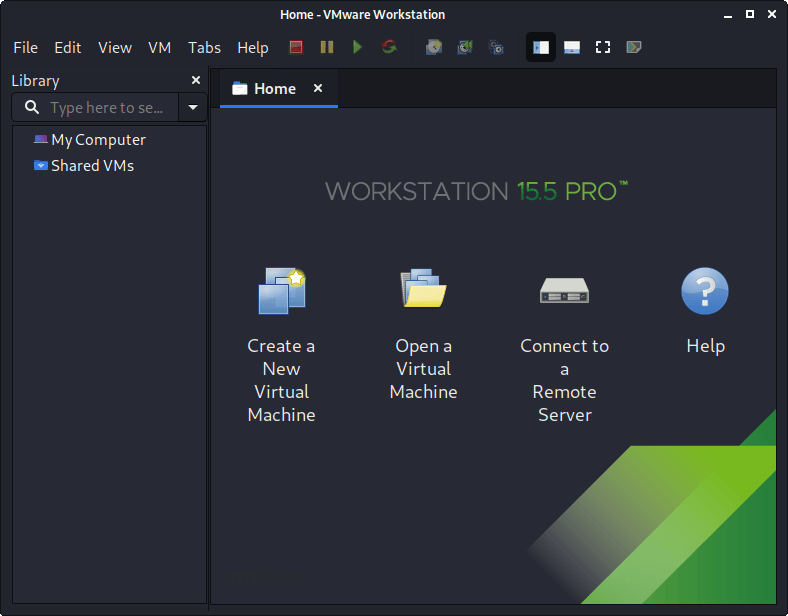
Upon starting up VMware Workstation, select "Create a New Virtual Machine".
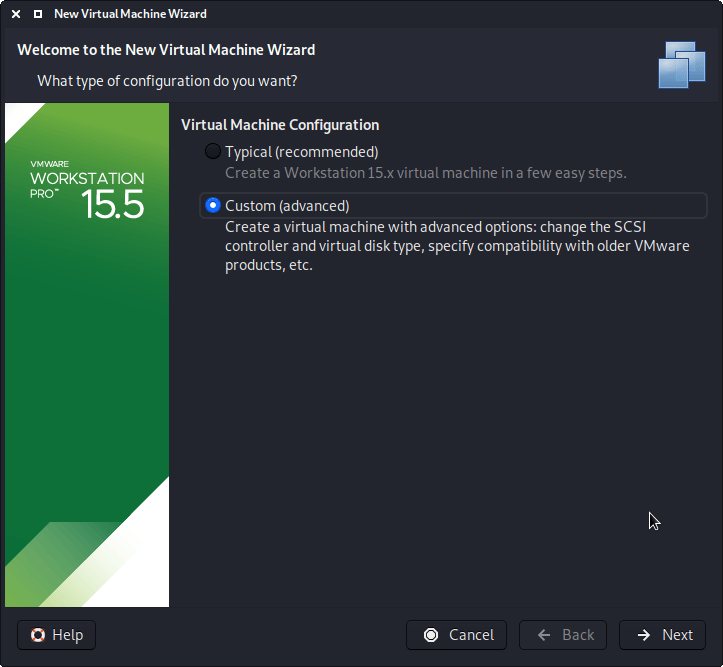
When you have the option, select "Custom (advanced)" for the Virtual Machine Configuration, as this volition allow united states to have more control over the creation of the VM.
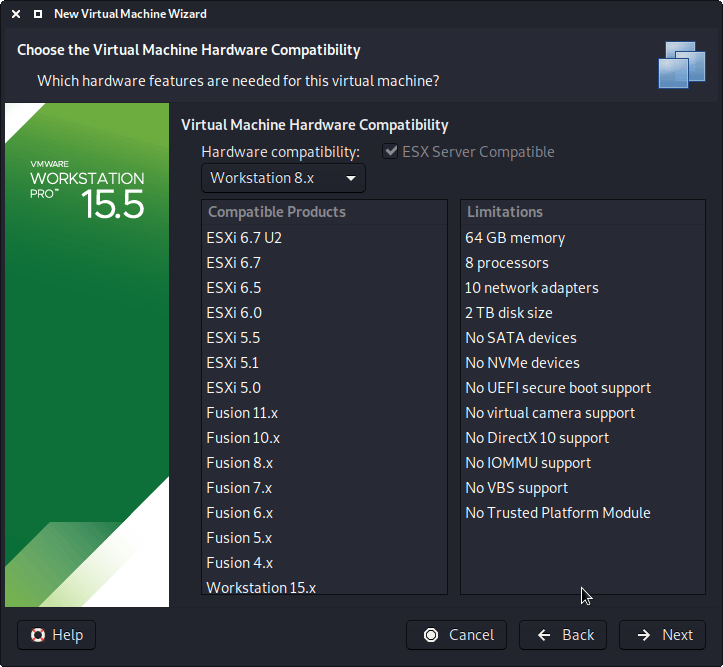
The next screen is "Virtual Automobile Hardware Compatibility", which we apply "Workstation 8.x".
This allows for more users to benefit from Kali Linux out of the box (without having to edit the .vmx file to downgrade). If you are using a later version of VMware than v8, upon start upward, VMware will prompt virtually upgrading the VM. This will remove any limitations caused by older VMware profiles. However, about users do non take their Kali Linux VM using all these extra resource (see screenshot beneath), so they wouldn't do good from having the latest profile, which is why nosotros transport with a older profile.
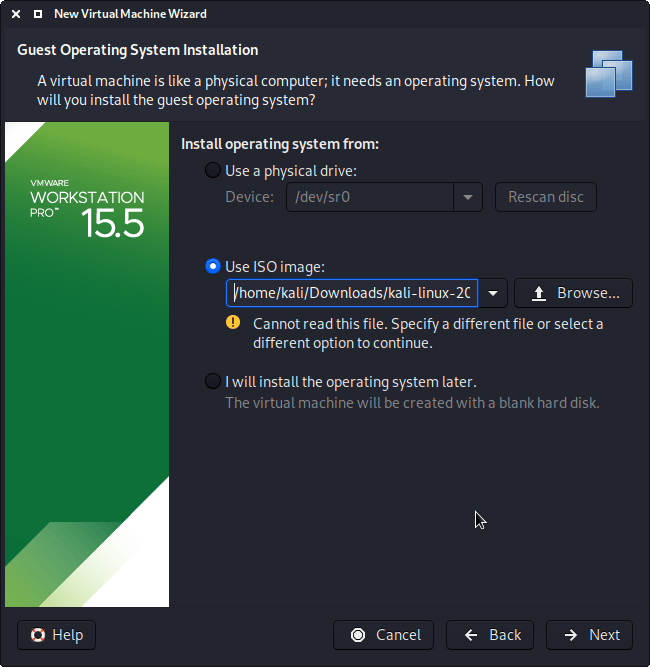
On this screen, we select the Kali Linux image to use to install from. We select "Scan", and navigate to the location of the ISO that we downloaded. For more information on what paradigm to download, we take written up a guide.
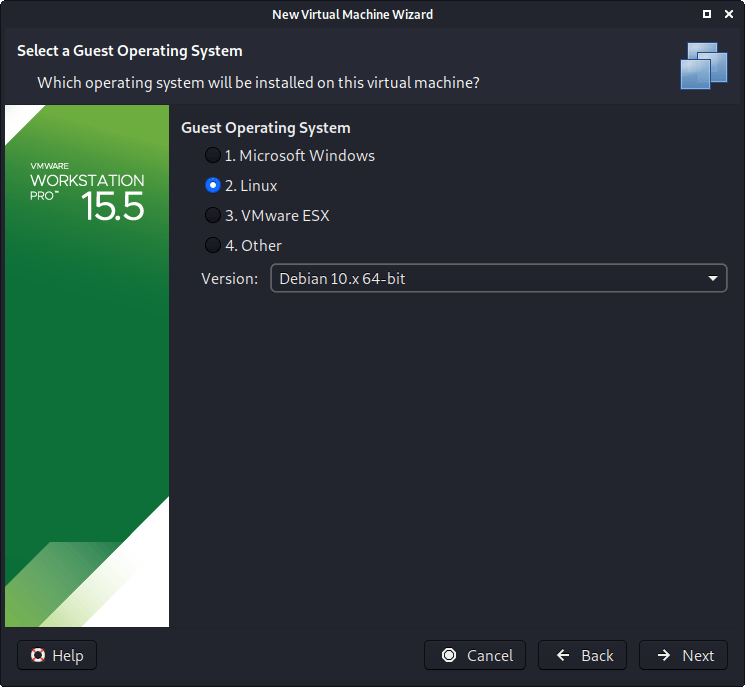
When yous see the "Guest Operating Organisation" screen, select "Linux", then the latest version of Debian for the version (every bit Kali is based on Debian). In this example, its Debian 10. Nosotros are going to be use the x64 paradigm to install Kali, so nosotros have selected 64-bit.
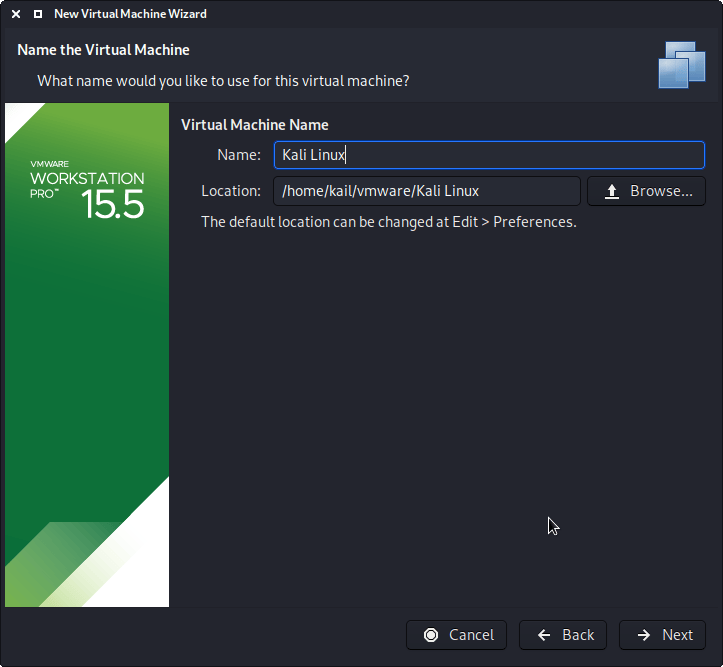
The adjacent screen is "Virtual Car Name", which is where you name the VM. This name is also used as the filename (such as the configuration, hard disk drive and snapshot - which is not inverse from this point).
We are keeping it generic in this guide, by using "Kali Linux" (every bit Kali Linux is a rolling distribution, and nosotros update Kali Linux). However for our releases, we employ the version number in the proper name as information technology is a fixed release (kali-linux-YYYY.N-vmware-Curvation. Instance: kali-linux-2022.one-vmware-amd64).
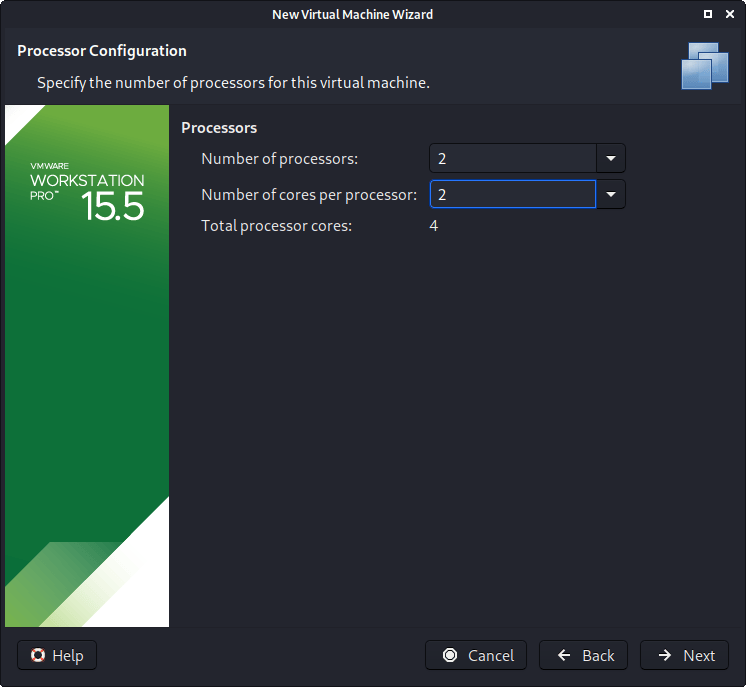
The adjacent screen is "Processors". Here we can start to define how many resources we give the VM. Kali will be able to perform more than tasks simultaneously and quicker if information technology is allocated more than resources. Nosotros select "2 processors" and "2 cores per processors", giving a total of 4 cores. You may wish to employ more or less depending on your system requirements.
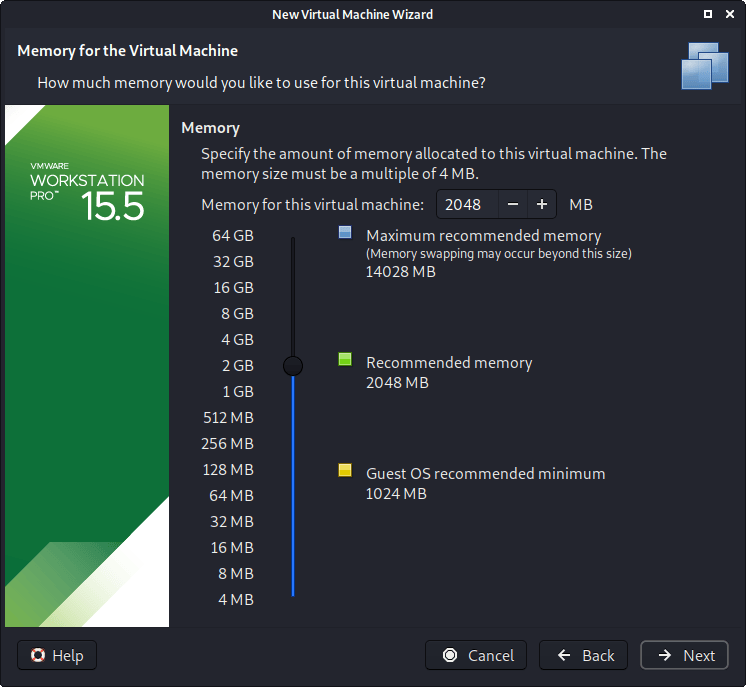
"Memory" is the next section, where we can define how much RAM to utilize. Again, the higher amount of RAM, the more than applications can be open up and at increased functioning. Various tools inside of Kali can be enervating of resources. When we brand the general VMs, we select 2GB (2048 MB) for RAM, but nosotros often increment this for our personal machines as we have high-performing devices with spare RAM which Kali can utilize.
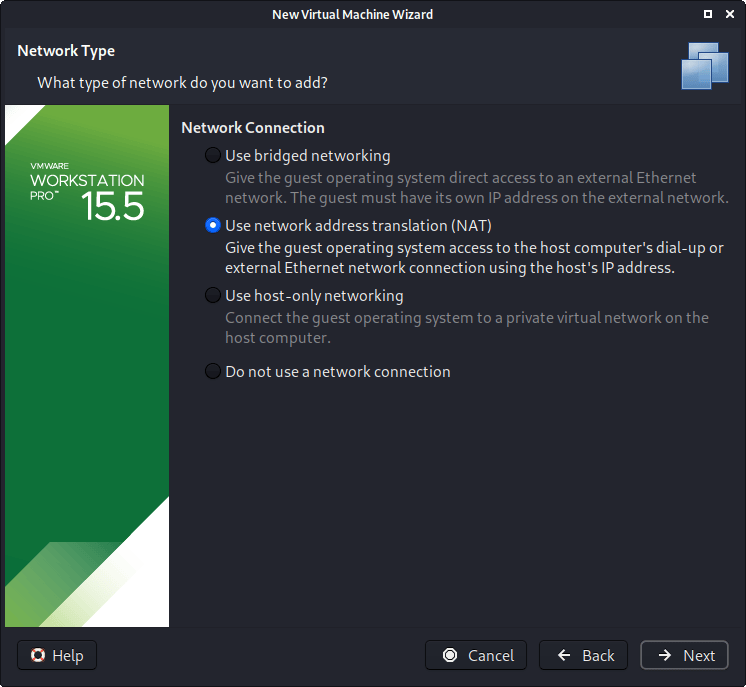
Nosotros are and then presented with "Network Connexion". We default to using a NAT connection. However, this tin easy be altered (even when the VM is powered on). This allows for Kali VM to talk to the Cyberspace, also as the rest of the LAN connection, without it taking upwards an boosted IP accost. The downside to this is it will not be able to receive reverse shells (without port forwarding within of VMware).
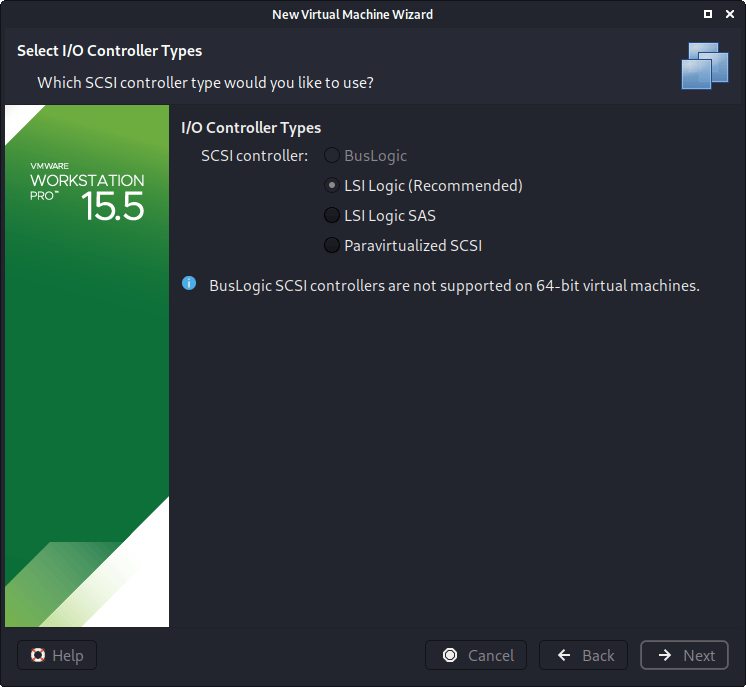
Adjacent is "I/O Controller Types". Nosotros accept the default value of "LSI Logic".
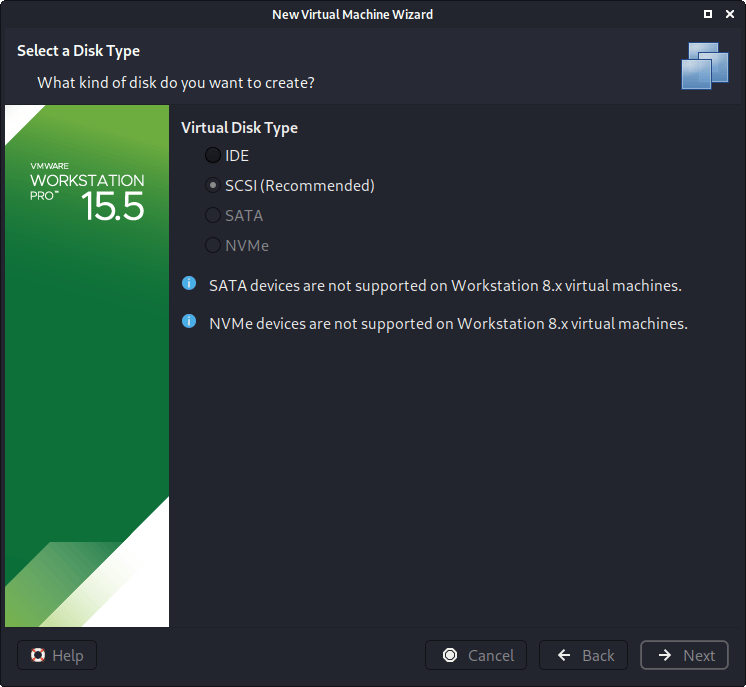
Next is "Virtual Disk Type". We accept the default value of "SCSI"
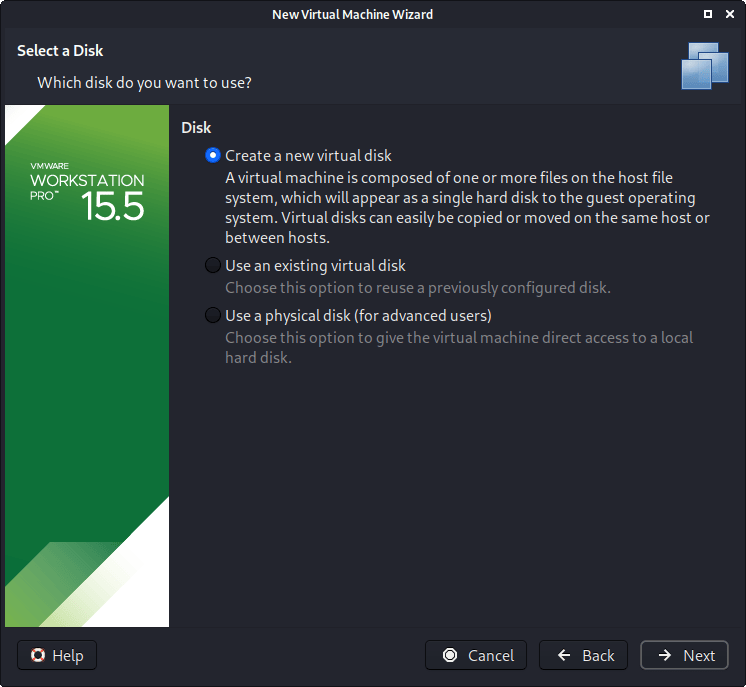
The following screen is "Disk", which allows us to "create a new virtual disk"
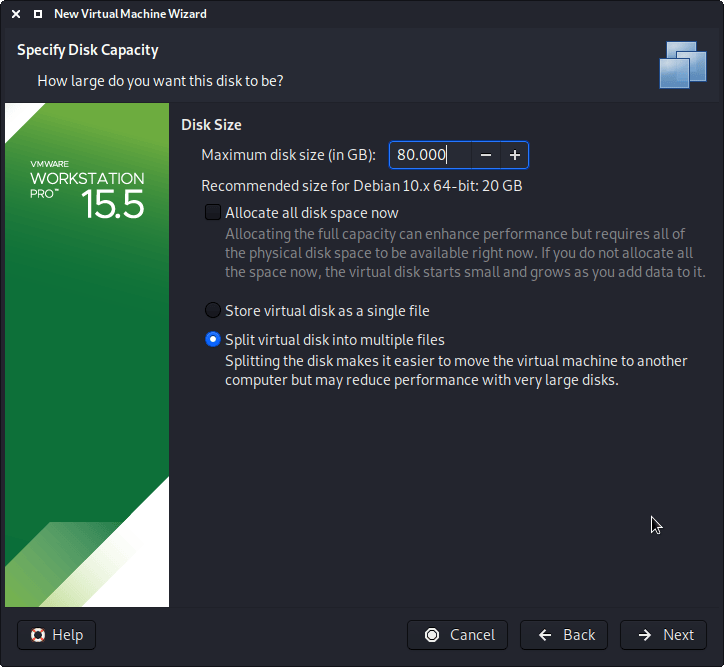
This screen below, "Disk Size", allows u.s. to define how large the virtual hd will exist. We utilize "80 GB" for our VMs.
Nosotros likewise don't accept information technology in a unmarried file, but instead "Divide virtual deejay into multiple files". The VM hard disk drive volition abound over time, to the maximum size, equally nosotros do non enable the "Classify all disk space".
It is possible to increase/subtract the hard disk later the VM has been created, however, if yous accept installed Kali, you'll need to and then also grow or compress the partition for the space to reflect that.
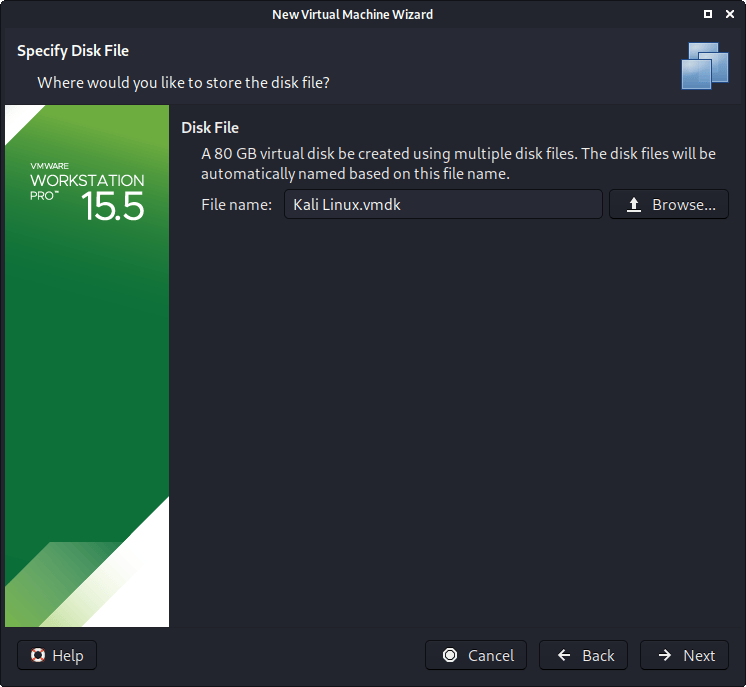
When it comes to the "Disk File" screen, nosotros accept the default value, which has been defined from our VM name earlier in the setup process.
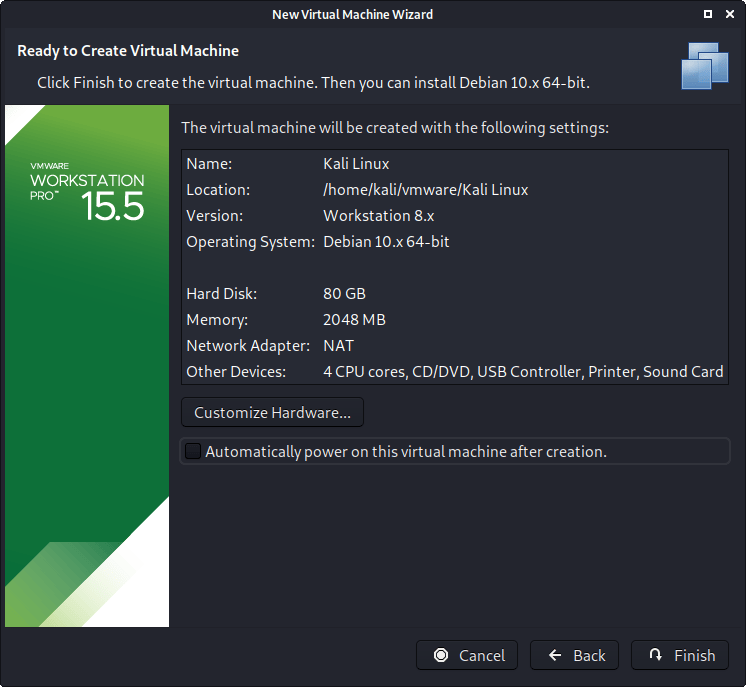
Nosotros are and then presented the final screen for the VM setup wizard, which gives us an overview of the settings nosotros picked.
Nosotros are happy with what's shown to u.s.a., so nosotros then printing "Finish". If you try and "Customize Hardware" at this phase, before the VM is fully created, not every setting is visible.
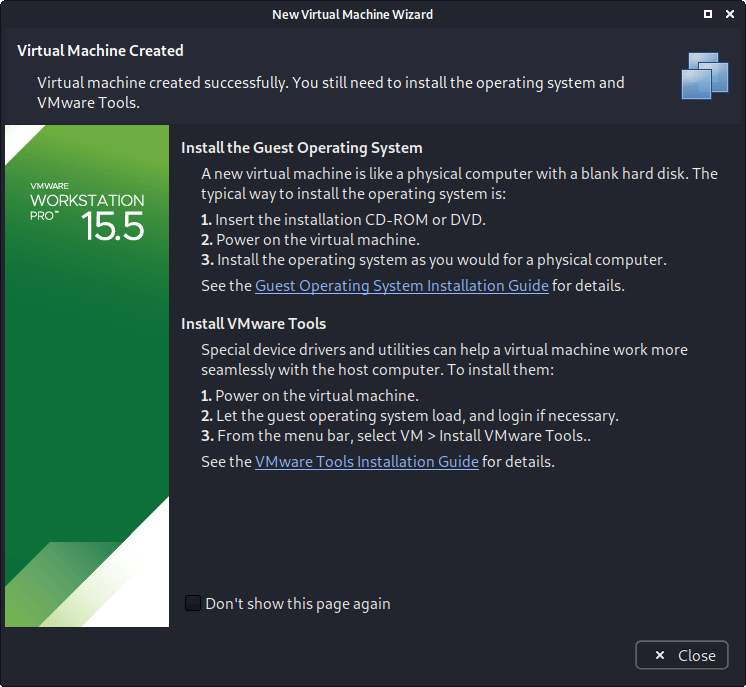
If this is the kickoff fourth dimension using the wizard, you may have the following prompt explaining how installing "VMware tools" will requite you a better feel when using the VM.
After reading and agreement the page, you may wish to tick the "Don't show this page again", before pressing close.
Edit Settings
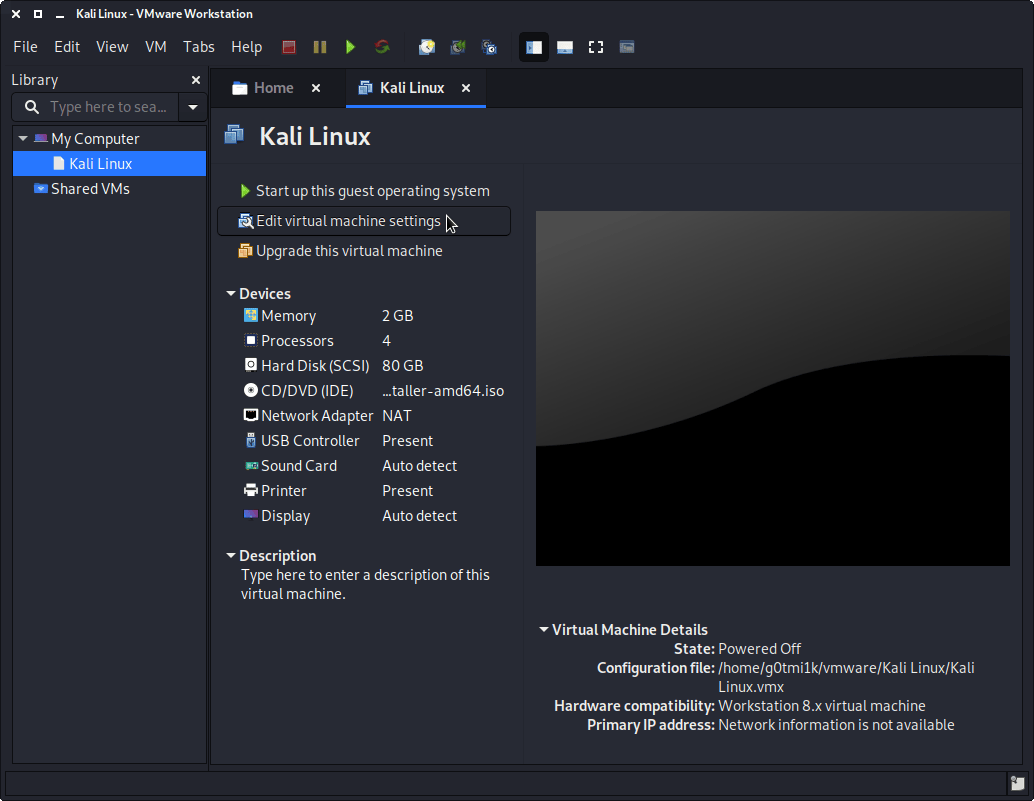
Earlier nosotros get-go up the VM, we now edit its settings, by pressing "Edit virtual machine settings".
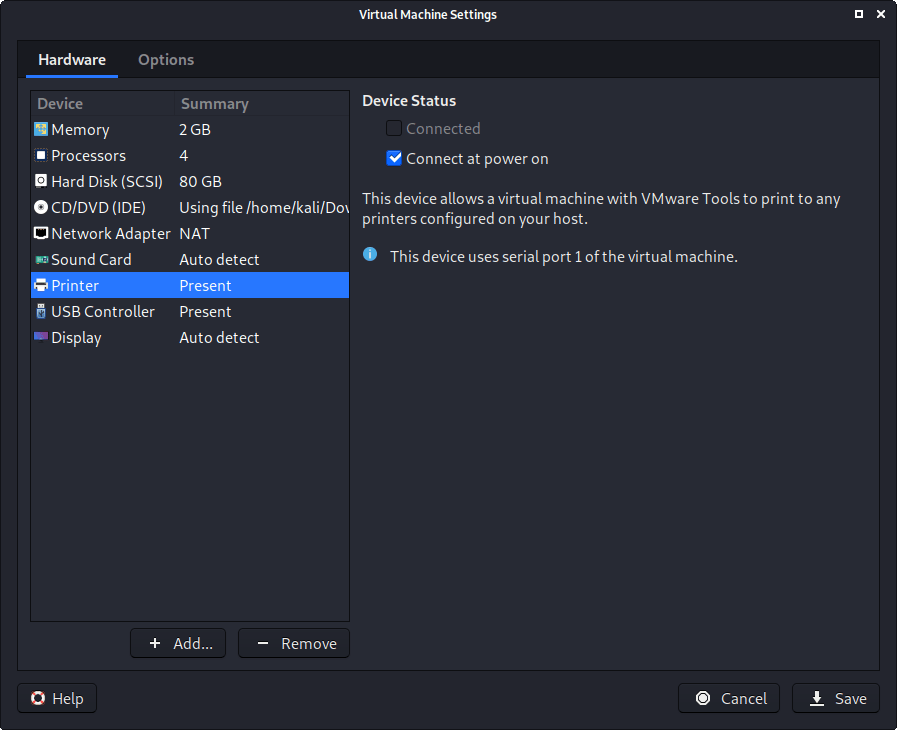
We do not have a use for a printer, so we remove it. Navigate to the "Printer" section, and and so press "Remove".
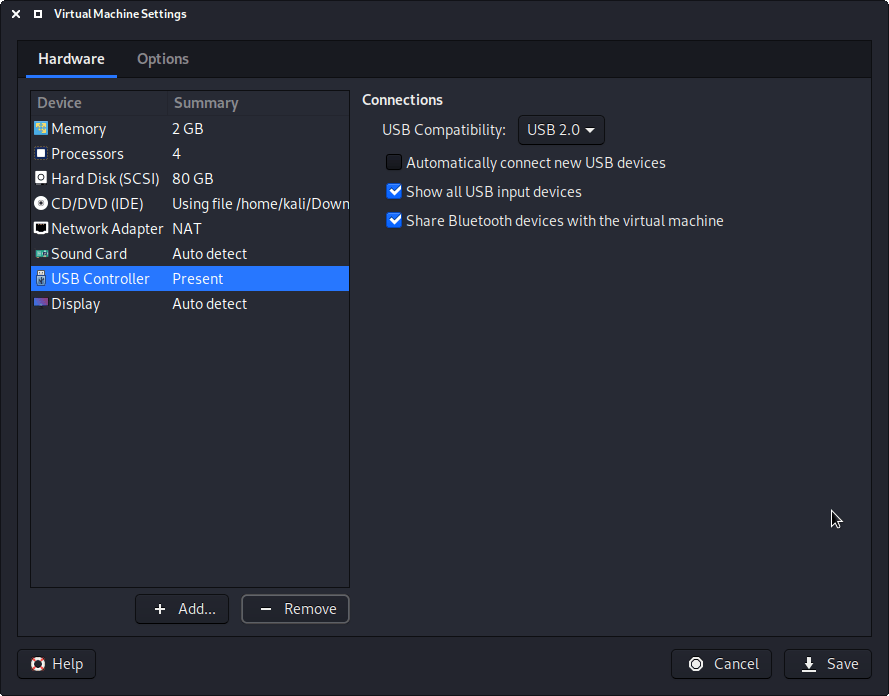
You may wish to edit the "USB" settings to alter how USB devices behave. Hither we take disabled "Automatically connect new USB devices" (may non have the option depending on your VMware version) and enabled "Show all USB input devices".
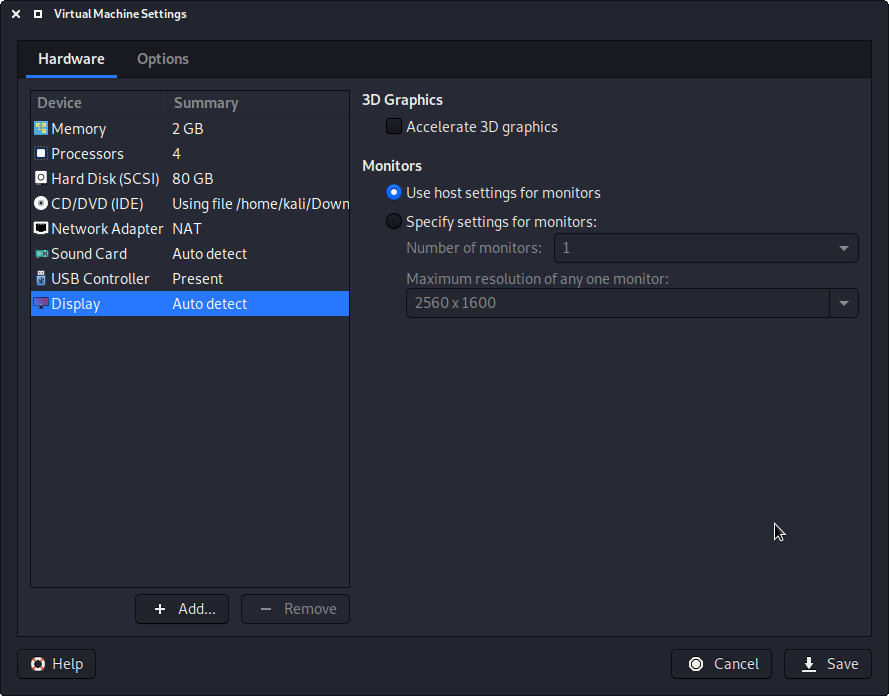
Another particular to point out is in the "Display" section. Brand sure that "Accelerated 3D graphics" is disabled, as people have reported that causes issues.
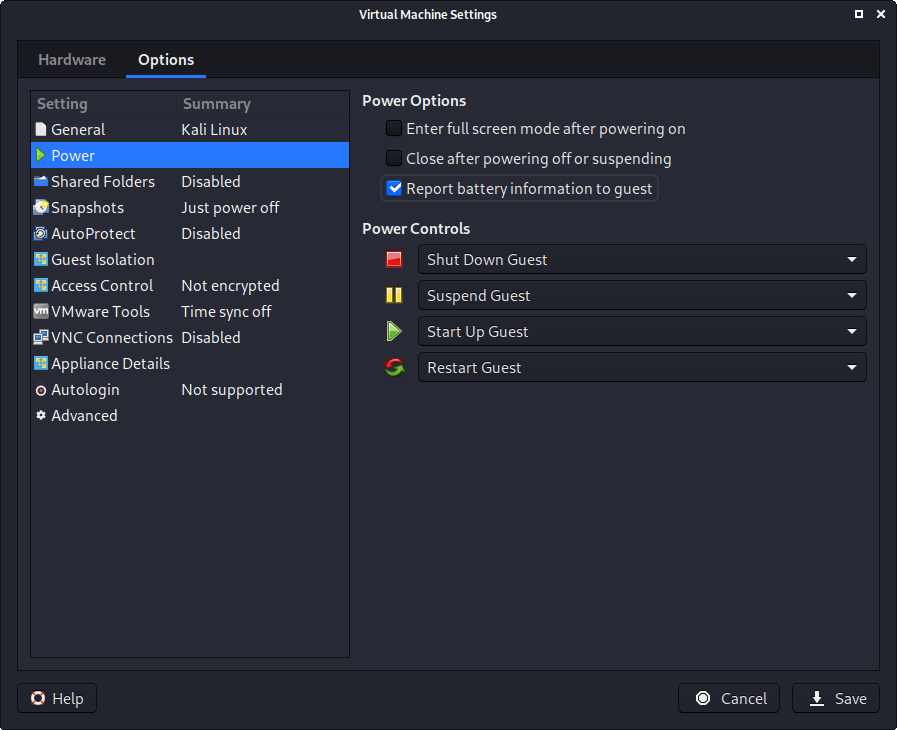
We then movement over to the "Options" tab, and move down to "Power". Nosotros choose to enable "Report bombardment information to guests", as it is a handy matter for users who use Kali on a laptop/notebook.
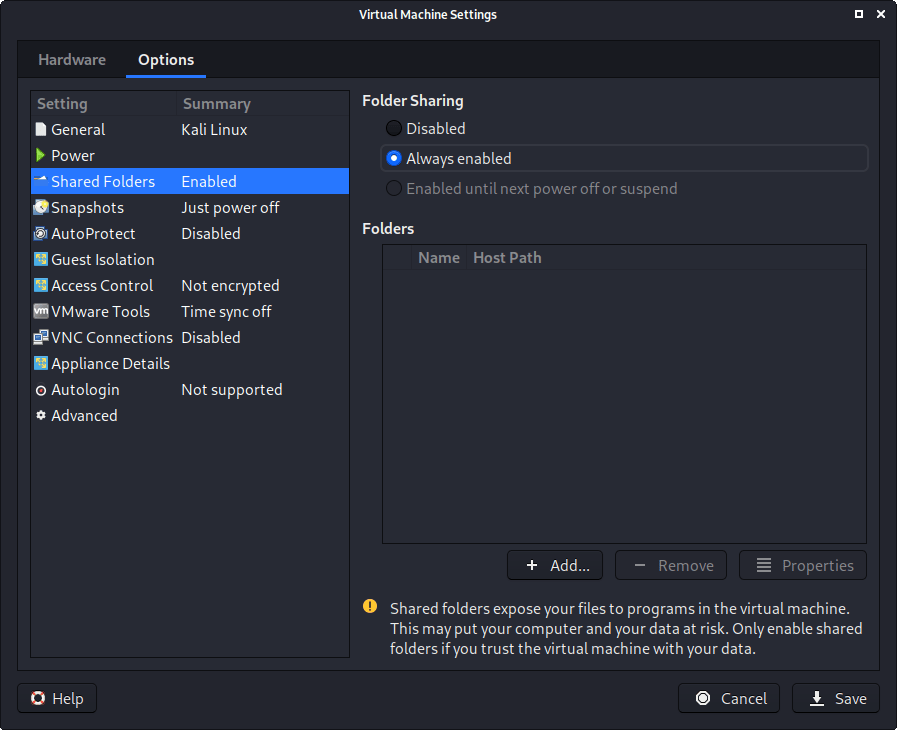
In "Shared folders", nosotros select "Always enable". At this phase, do not share whatsoever paths, equally some users may not wish for it.
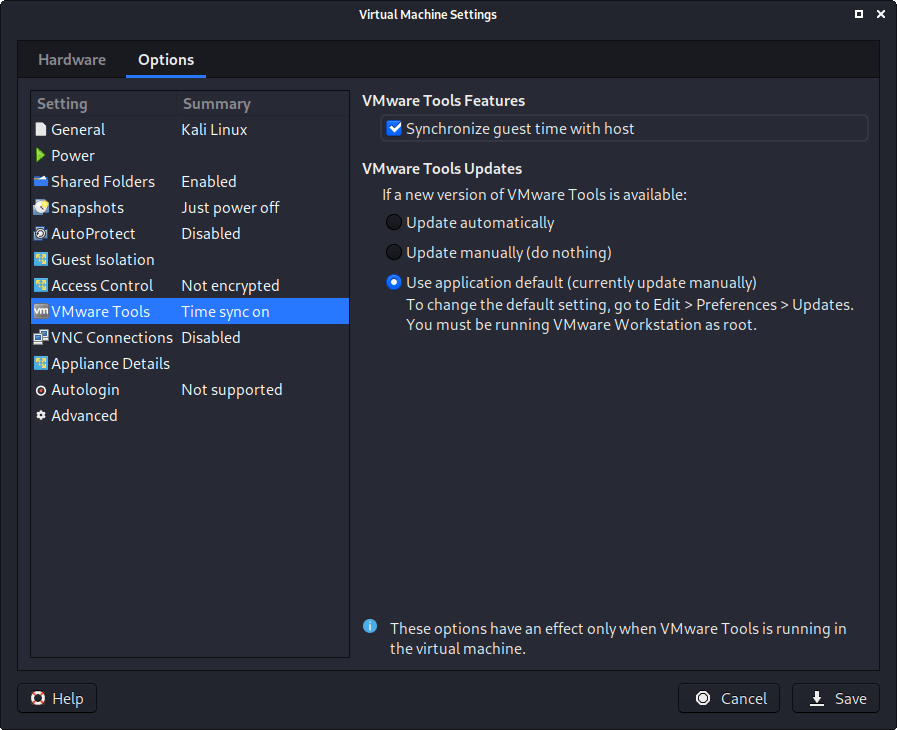
The final option we alter is "VMware Tool", where we enable "Synchronize invitee time with host".
Subsequently all this is done, we salvage, start up the VM, and and then keep installing Kali Linux as we normally would for a blank metal install.
During Kali Linux setup process, the install sorcerer should detect if its inside a VM. If it is, should and so automatically install any boosted tools (such every bit open-vm-tools) to give a ameliorate user experience. If you lot want to manually re-install information technology, you can run across our VMware Guest Tools Guide.
Source: https://www.kali.org/docs/virtualization/install-vmware-guest-vm/
0 Response to "Does Deleting a Virtual Machine on Vmware Make the Resources Available to the Host Again"
Post a Comment